




















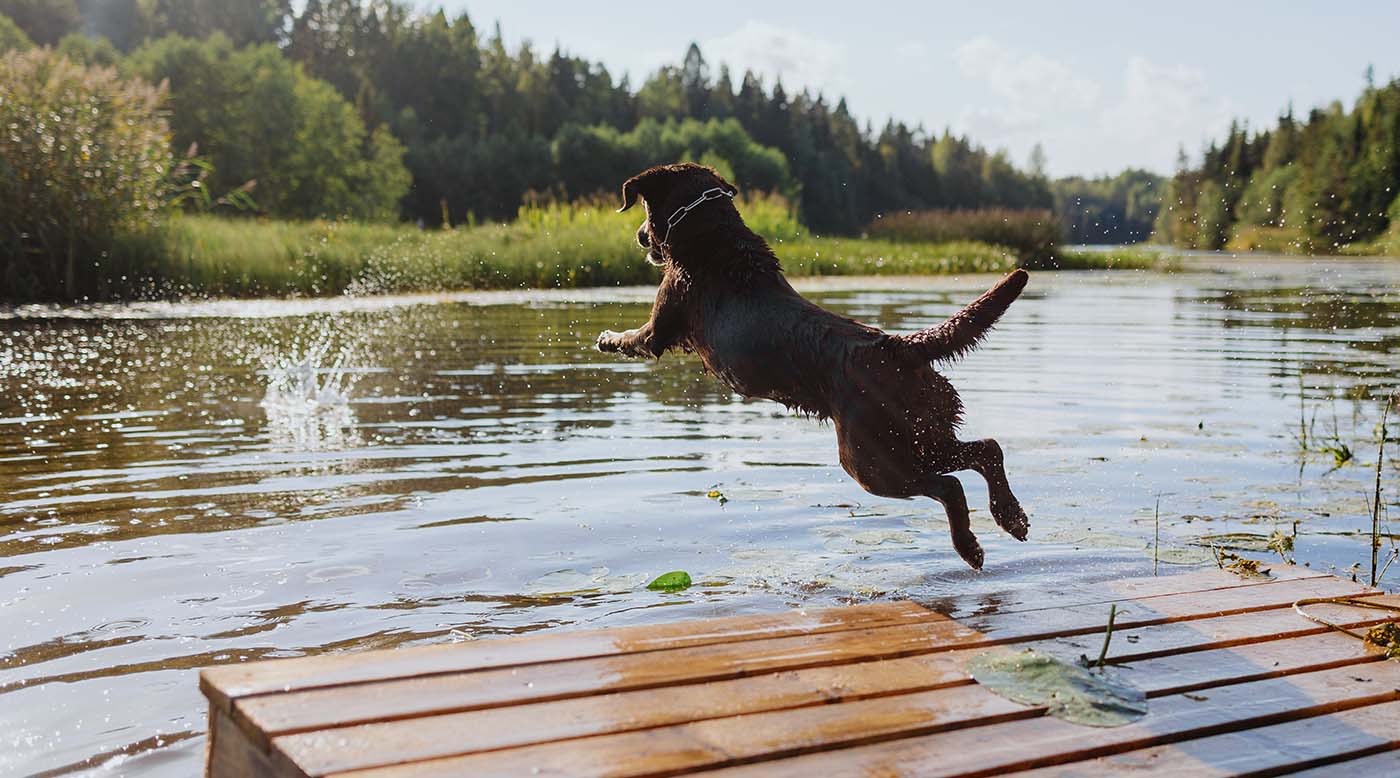
The tail is one of your dog's most important means of expression. With it, he shows joy, excitement, uncertainty, or interest. It is all the more unsettling when the tail suddenly hangs limply and barely moves. Many dog owners are alarmed at this moment because their dog was completely normal just a few hours earlier.
This phenomenon occurs particularly often after a swimming day at the lake, after extensive swimming, or after particularly active summer days. The dog suddenly appears more cautious, avoids wagging its tail, or even shows visible discomfort when sitting and standing up. It is not uncommon for owners to initially suspect an injury or accident.
In fact, these symptoms often point to what is known as "limber tail syndrome" (or "cold tail"). Although the name sounds harmless at first, it is a painful temporary dysfunction of the muscles in the tail area. The good news: in many cases, the condition significantly improves with sufficient rest.
In this article, we will explain exactly what limber tail syndrome is, what symptoms are typical, and how you can distinguish the discomfort from other problems. You will also learn when a vet visit is advisable and how you can support your dog during the recovery phase.
What exactly is limber tail syndrome?
Limber tail syndrome is also known in veterinary medicine as acute tail paralysis or tail syndrome. The muscles in the area of the tail base are primarily affected. Overuse or heavy strain can lead to painful changes that cause the dog to no longer carry its tail normally.
A very characteristic appearance is typical: the tail often still sticks out slightly horizontally at the base and then hangs limply downwards. Some dogs carry the entire tail directly downwards. The usual wagging is often completely absent or occurs only very restrictedly.
The exact cause is still not fully understood. However, experts assume that overuse of the muscles plays a central role. Particularly intensive tail movements, prolonged swimming, or unusual physical exertion can contribute to the muscles being overstressed.
Active dogs are particularly affected. Retrievers, hunting dogs, and other active breeds are especially often presented with limber tail syndrome. In principle, however, the problem can occur in almost any dog.
It is important to know that while limber tail syndrome can be painful, it does not automatically mean permanent damage. Nevertheless, the condition should be taken seriously so that the muscles can recover sufficiently.
Why limber tail syndrome often occurs in summer
Many pet owners first encounter the term limber tail syndrome during the warm season. This is no coincidence. Especially in summer, several factors combine that can increase the risk for this discomfort.
An important trigger is swimming. For many dogs, a jump into the lake is one of the most wonderful summer activities. However, the tail works much more intensively than many realize. It not only serves communication but also supports balance and steering in the water. During longer swimming sessions, the muscles in the tail base area are therefore heavily strained.
In addition, many dogs are significantly more active in summer than in the rest of the year. Long walks, trips to the swimming lake, hikes, or holidays lead to unaccustomed exertion. Especially dogs who are usually only moderately active can reach their physical limits due to this sudden increased exertion.
Cold water is also often discussed as a possible influencing factor. If a heavily heated dog jumps directly into very cold water, this can put additional strain on the muscles. Not all connections are conclusively clarified scientifically, but veterinarians observe such cases particularly often after intensive swimming excursions.
Interestingly, limber tail syndrome often only occurs several hours after the actual exertion. Many dogs show no abnormalities during swimming or romping. Only later or the next morning do owners notice that the tail suddenly hangs limply. As a result, the connection with the previous day's activities is not always immediately recognized.
Therefore, it is always worthwhile to consider the events of the past few hours when there are sudden changes in tail carriage. Especially after a particularly active summer day, the history often already provides an important clue to the possible cause.
How you can recognize limber tail syndrome
Limber tail syndrome usually shows a very typical appearance. Nevertheless, many owners initially confuse it with an injury, a sprain, or other problems. It is all the more important to know the characteristic signs.
The most striking feature is the altered tail carriage. While it is normally actively used when running, playing, or greeting, it suddenly hangs limply downwards. Many dogs avoid wagging almost entirely. Even in situations where they would usually be happy, the tail remains unusually still.
In addition, many dogs show signs of pain in the tail base area. Some react sensitively to touch or sit down more carefully than usual. Standing up can also seem a little more difficult. Some dogs turn around more often or look noticeably often towards their tail.
Further typical indications can be:
- hanging or limp tail
- restricted or absent wagging
- pain reactions at the tail base
- cautious sitting
- altered posture
- reduced joy of movement
It is important, however, that similar symptoms can also occur with other problems. Injuries, disc problems, or other musculoskeletal diseases cannot be reliably ruled out based solely on tail carriage.
Precisely for this reason, a sudden change should always be observed carefully. Especially if severe pain, paralysis, or other abnormalities occur, a veterinary examination is advisable. Only then can it be reliably determined whether it is actually limber tail syndrome or whether other causes are responsible.
When a vet visit is advisable
Even if limber tail syndrome improves significantly within a few days in many cases, it should not simply be ignored. The condition can be quite painful for dogs, and similar symptoms can also occur with other health problems.
A vet visit is particularly advisable if you are unsure how the discomfort arose. While typical limber tail syndrome often occurs after swimming, romping, or unaccustomed exertion, injuries, bruises, or other conditions can also lead to altered tail carriage.
Particular attention should be paid to the following situations:
- severe pain reactions
- significant movement restrictions
- problems with defecation
- visible injuries
- swelling in the tail area
- discomfort that does not improve
- additional lameness or neurological abnormalities
Especially when it occurs for the first time, a veterinary examination is often helpful. It not only provides certainty but also helps to rule out other causes. Many dog owners are surprised how similar various diseases in the back, pelvis, or tail area can appear.
Veterinarians can determine through a thorough examination whether the symptoms actually fit limber tail syndrome or whether further diagnostics are necessary. The sooner serious causes are identified, the better they can be treated.
It is also important not to unnecessarily strain the dog during the discomfort. Even if he seems generally fit, the muscles should be given sufficient time to recover.
How you can support your dog during recovery
The most important measure for limber tail syndrome is usually rest. Many dogs want to remain active despite the discomfort because they generally feel well. Nevertheless, the affected muscles need time to regenerate.
In the first few days, intensive exertion should be avoided as much as possible. Long hikes, wild games, or extended swimming sessions should temporarily be put on hold. Instead, quiet walks are often the better choice. They allow movement without additionally straining the affected muscles.
An comfortable resting place is equally important. During the recovery phase, many dogs benefit from a comfortable lying surface where they can relax, sleep, and regenerate. Sufficient sleep and rest periods support the body's natural regenerative processes.
Many pet owners also use the emmi-pet Physio-Set as part of their supportive care routine in such situations. It can complement the daily care of muscles and musculoskeletal system and is used particularly in dogs who need support for regeneration after sporting activities or intensive exertion. However, its use does not replace a veterinary diagnosis or treatment but can be meaningfully integrated into a holistic care concept.
It is equally important to observe the further course. If the symptoms improve from day to day, this often indicates the typical course of limber tail syndrome. If the symptoms remain unchanged or even worsen, veterinary advice should be sought again.
Limber tail syndrome often occurs suddenly and understandably causes uncertainty. Especially after an active day at the water, the suddenly limp tail initially appears alarming. In many cases, however, it is due to temporary overuse of the muscles. Those who know the typical symptoms, observe carefully, and give their dog sufficient rest create good conditions for a quick recovery. At the same time, the following applies: in case of uncertainties, severe pain, or unusual accompanying symptoms, a veterinarian should always be consulted. This ensures that your dog receives the best possible support and can soon wag their tail with full joy again.