















When discussing orthopedic dog beds, many pet owners initially think of older dogs with joint problems or mobility limitations. Indeed, these special resting places are often associated with senior dogs. However, it is easy to forget that young dogs also spend a large part of their day sleeping and resting.
It is precisely in the first years of life that the musculoskeletal system develops most intensely. Bones grow, muscles build up, and joints are stressed daily by playing, running, and romping. At the same time, important regeneration processes take place during resting phases. The sleeping place plays a significantly larger role than many dog owners realize.
Of course, not every young dog necessarily needs an orthopedic dog bed. Nevertheless, it is worth taking a closer look at the advantages of such sleeping surfaces. Because comfort, pressure relief, and good body support can be beneficial not just in old age.
In this article, we explain why orthopedic dog beds are often underestimated, what importance restful sleep has for young dogs, and what you should consider when choosing a suitable sleeping place.
Why orthopedic dog beds are often underestimated
Many people only deal with the topic of dog beds when problems already arise. As long as the dog seems young, active, and healthy, almost any sleeping place seems sufficient. After all, many dogs seemingly lie down on carpets, tiles, or even directly on the floor without problems.
In reality, dogs are very adaptable. However, this does not automatically mean that every sleeping surface is equally comfortable. Similar to humans, the difference often only becomes apparent over longer periods. A pleasant and well-supporting sleeping environment can help the body recover optimally during rest phases.
Orthopedic dog beds pursue precisely this goal. They are designed to support the body as evenly as possible and reduce pressure points. This is not about treating health problems or preventing diseases. Rather, the focus is on comfort during daily rest phases.
Young dogs, in particular, spend an astonishing amount of time sleeping or resting. Puppies often sleep well over 15 hours a day, but even young adult dogs need many hours of rest. During this time, muscles, tendons, and other structures of the musculoskeletal system regenerate.
Therefore, it is worth not just viewing the sleeping place as an accessory. It is an integral part of daily life and often accompanies the dog for many hours. A comfortable sleeping place can thus contribute positively to general well-being even at a young age.
The importance of good sleep for young dogs
Sleep is far more than just a simple rest period for dogs. During resting phases, the brain processes new impressions, the body regenerates, and numerous biological processes run at full speed. Especially in young dogs, this period plays a particularly important role because the organism is still developing.
Many dog owners underestimate how much sleep young dogs actually need. Puppies often spend most of the day sleeping. But even young dogs and young adult dogs need significantly more rest than many people realize. Romping, learning, exploring, and playing challenge the body anew every day.
During sleep, important regeneration processes take place. Muscles recover from exertion, joints are relieved, and the body processes the day's activities. At the same time, sufficient sleep supports concentration and learning behavior. Especially during the developmental phase, regular rest periods are therefore indispensable.
The quality of this recovery depends not only on the duration of sleep. The environment also plays a role. A dog that constantly has to change its position or cannot find a comfortable sleeping place often sleeps less relaxed. Many dogs therefore deliberately look for places where they feel safe and comfortable.
A high-quality sleeping place can help young dogs settle down more easily. This does not mean that an orthopedic dog bed automatically sleeps better than any other sleeping place. However, it shows how important the conditions for good recovery can be. Anyone who offers their dog a comfortable retreat thus contributes to an important part of their daily well-being.
How joints, muscles, and growth can be supported
The musculoskeletal system of a young dog is developing for many months. Bones grow, muscles develop, and joints must adapt to increasing loads. Especially during this time, the body is regularly challenged.
Particularly active dogs spend a large part of their day running, jumping, and playing. Considerable forces act on joints and muscles. The subsequent resting phases allow the body to process these loads and prepare for new activities.
A suitable sleeping surface can help to support the body as evenly as possible during these recovery times. Orthopedic dog beds are often characterized by materials that adapt to the body shape and can reduce pressure points. This means that certain areas of the body are less stressed when lying down.
Larger dog breeds, in particular, often benefit from good pressure distribution. Dogs with higher body weight stress joints and muscles more than smaller breeds even at a young age. At the same time, they spend many hours resting on their sleeping place.
However, a realistic classification is important. An orthopedic dog bed does not replace exercise, a balanced diet, or veterinary care. Rather, it is a component within an overall health-oriented approach. Together with sufficient exercise, appropriate strain, and regular health checks, a high-quality sleeping surface can help make everyday life as pleasant as possible for the dog.
For which young dogs an orthopedic dog bed can be particularly interesting
In principle, every dog can benefit from a comfortable sleeping surface. Nevertheless, there are some groups of dogs for whom pet owners particularly often consider an orthopedic dog bed.
These include large and fast-growing dog breeds. Labrador Retrievers, Golden Retrievers, German Shepherds, Bernese Mountain Dogs, or Great Danes reach a considerable body weight within a short time. During growth, significant forces act on joints, muscles, and bones. A comfortable resting place is often particularly appreciated during such phases.
Sporty active dogs also often benefit from good regeneration options. Dogs that regularly hike, participate in dog sports, or are very active, stress their bodies daily. After such activities, recovery phases become more important. A comfortable sleeping place can help the dog rest as relaxed as possible after physical exertion.
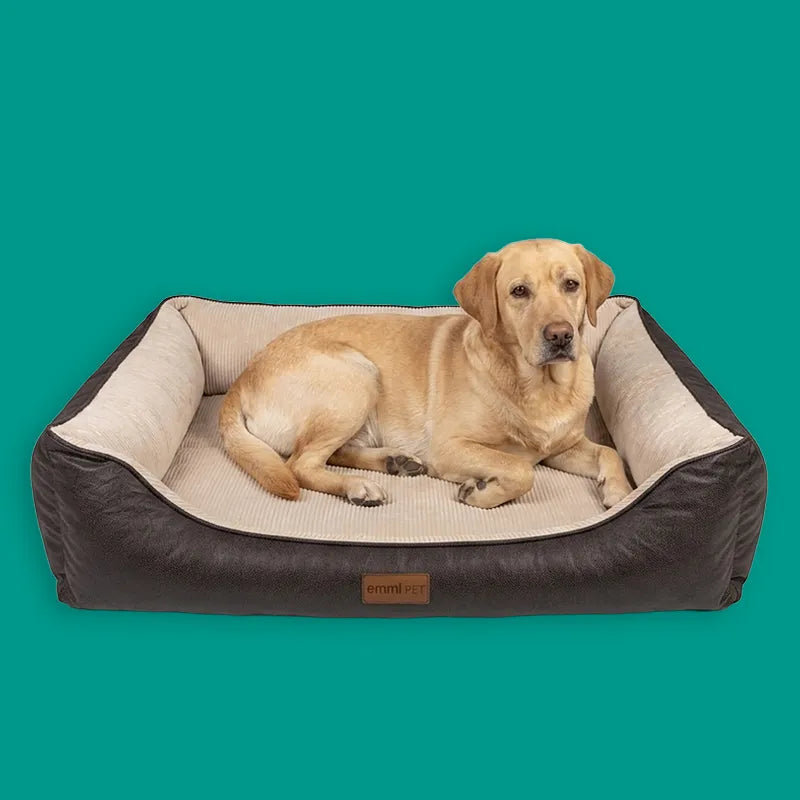
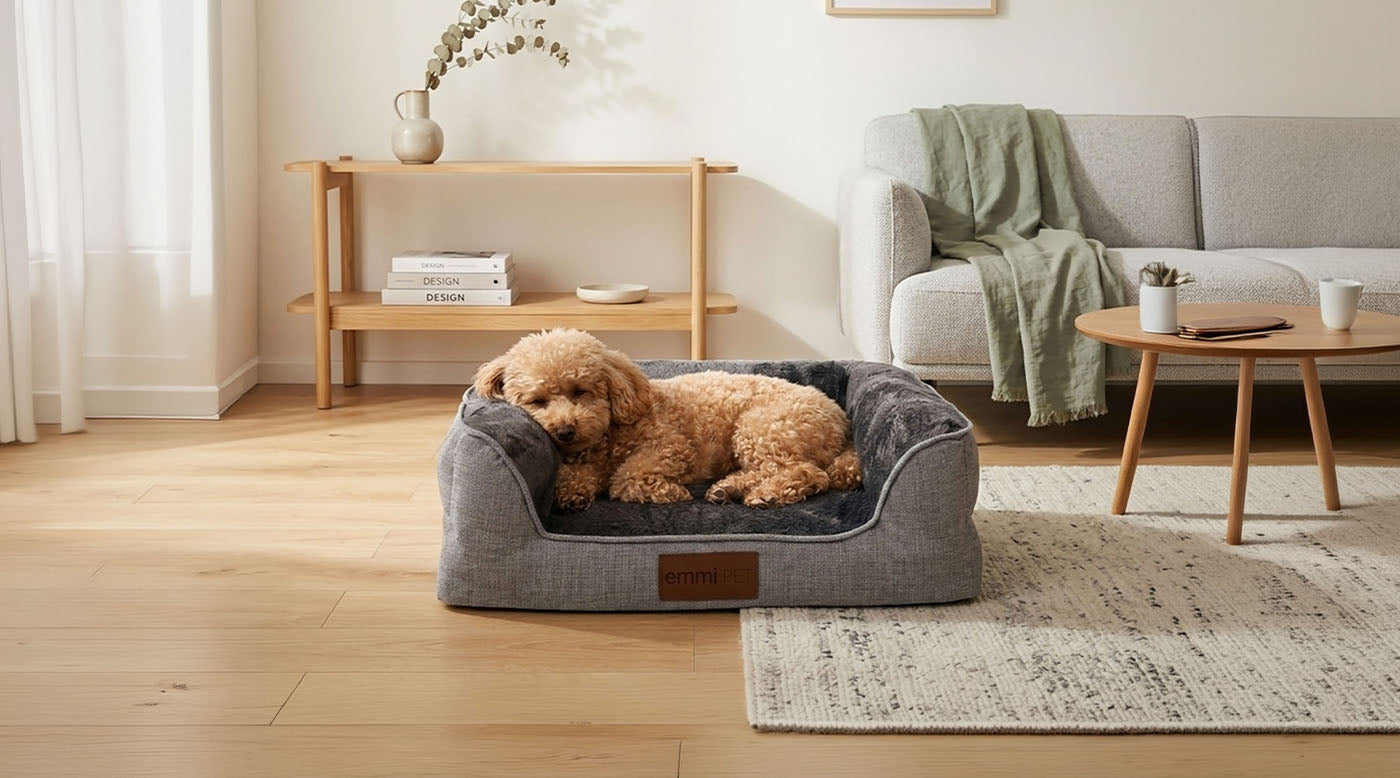
Our emmi-pet orthopedic dog bed can also be interesting for dogs that spend a lot of time indoors or enjoy extended rest phases. Since dogs spend a large part of their day lying down, the quality of the sleeping surface makes a noticeable difference in the long run.
Of course, this does not mean that every young dog necessarily needs an orthopedic dog bed. Many animals also get along very well with other high-quality sleeping places. The decision ultimately depends on individual factors such as size, activity level, sleeping behavior, and the dog's personal needs.
What you should consider when choosing
Anyone interested in an orthopedic dog bed quickly realizes that the selection is large. The models differ not only in size and design but also in material, construction, and quality.
An important point is the correct size. Your dog should be able to stretch out completely without body parts hanging over the edge. Many dogs change their position during sleep and benefit from sufficient space.
The padding is equally crucial. A good sleeping surface should support the body without being too hard or too soft. The dog should be able to sink in comfortably but still receive sufficient stability. High-quality materials usually retain their shape longer and offer more even support.
Practicality also plays a role. Removable and washable covers make cleaning much easier. Since dogs shed hair, track dirt into the house, or occasionally get into bed with wet paws, an easy-care solution pays off in the long run.
In addition, it is worth considering your dog's preferred sleeping style. Some dogs love high edges to lean on, while others prefer to sleep stretched out freely. The ideal sleeping place is therefore based not only on health aspects but also on the individual habits of your dog.
Orthopedic dog beds are often associated with older dogs. However, young dogs can also benefit from a comfortable and well-supporting sleeping surface. Especially in a phase of life characterized by growth, learning, and physical activity, restful rest periods become increasingly important. A high-quality sleeping place does not replace exercise, a balanced diet, or veterinary care, but it can make a valuable contribution to daily well-being. By observing your dog's needs carefully and choosing a suitable resting place, you lay a good foundation for many relaxed hours and pleasant recovery in everyday life.