













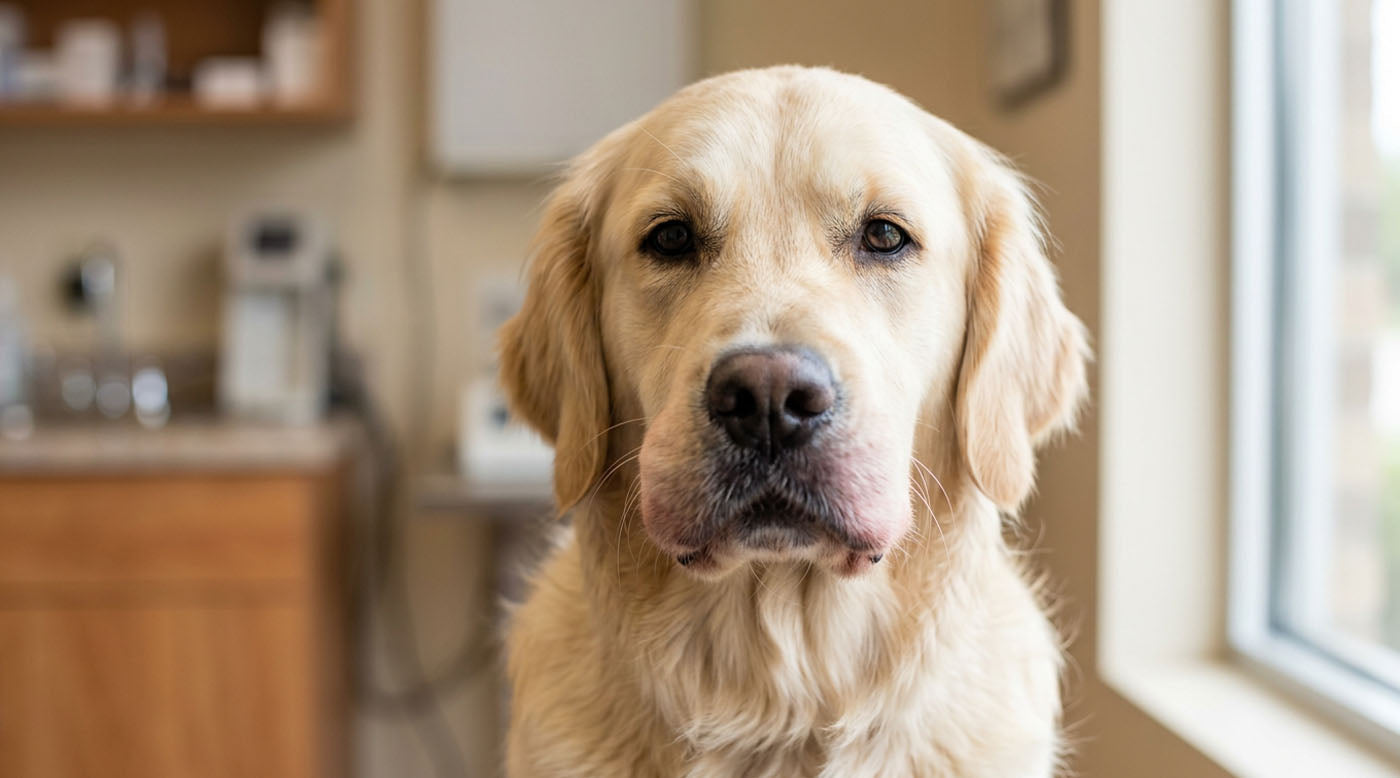
Many dog owners are initially startled when they notice that their dog's lips suddenly appear thicker than usual. The change is often noticed during petting, playing, or feeding. Sometimes the swelling affects only one side, in other cases both lips appear enlarged or slightly swollen.
The good news first: Not every swelling in the lip area is automatically an emergency. Nevertheless, a sudden change should always be taken seriously. The lips are a sensitive area of the head and can react to a wide variety of influences. In addition to external irritations, changes in the mouth, teeth, or gums can also be a cause.
For pet owners, classification is often difficult because many causes initially appear very similar. A slight swelling can be harmless, while other changes require a timely veterinary examination. Therefore, it is worthwhile not only to look at the swelling itself but also to pay attention to other changes in the dog's behavior or general condition.
In this article, we explain what causes can be behind suddenly swollen lips, what role oral health plays, and how to recognize when a vet visit is advisable.
Why Swollen Lips Can Occur Suddenly
The lips consist of sensitive tissue that is very well supplied with blood. This is precisely why they often react quickly to external or internal influences. Even minor irritations can lead to visible swelling.
Sometimes a thickening develops within a few minutes. In other cases, it develops slowly over several hours or days. This temporal course is often an important clue for identifying the cause. Sudden swellings, for example, are often triggered by external stimuli, while changes related to tooth or gum problems often develop more insidiously.
Even minor injuries do not always go unnoticed. Dogs explore their surroundings intensively with their mouths. During play, chewing, or sniffing, minor irritations can arise that temporarily lead to swelling. Likewise, some dogs are sensitive to certain plants, insect contacts, or other environmental influences.
Furthermore, directly behind the lips are numerous structures that can influence the appearance. Gums, tooth roots, mucous membranes, and the surrounding tissue are close together. Changes in these areas can therefore also be noticeable externally.
This is precisely why swelling should never be viewed in isolation. The lips themselves are often not the actual cause, but merely indicate that something in the surrounding area needs attention. Observing the course and also paying attention to other symptoms often provides important clues to the possible cause.
Possible Causes in the Oral Cavity
If the lips suddenly appear thicker, a closer look into the mouth is worthwhile. There are numerous structures there that can lead to visible swelling when irritated or changed. The cause is not always directly in the lips themselves.
A common cause is gum inflammation. If bacterial plaque is not sufficiently reduced over a longer period, the gums can become irritated. Initially, slight redness or swelling often appears, which is hardly visible from the outside. Over time, however, these changes can also affect adjacent areas.
Individual teeth can also be involved. Damaged teeth, tooth root problems, or injuries in the mouth do not always cause clear pain immediately. Some dogs continue to eat normally and show few signs. Swelling in the lip area can therefore sometimes be one of the first visible signs that something is wrong.
In addition, small injuries to the mucous membrane can occur. When chewing on hard objects, sticks, or toys, irritations occasionally occur, leading to local swelling. These changes often heal on their own, but should still be monitored.
Foreign bodies also play a role. Small plant parts, awns, or other materials can get stuck between the gums and lips and cause irritation there. The dog then often tries to reach its snout with its paw or shows increased smacking and licking.
Since many of these causes are not clearly identifiable from the outside, a thorough examination remains particularly important. Especially if the swelling persists for a long time or other symptoms appear, the cause should be clarified by a veterinarian.
How to Tell When a Vet Visit Is Advisable
A slight swelling that quickly disappears and causes no further discomfort does not necessarily have to be a cause for concern. Nevertheless, there are some warning signs where you should not wait too long.
The development of the swelling is particularly important. If it increases significantly within a short time or spreads, your dog should be examined promptly. The same applies if the swelling develops very suddenly and your dog simultaneously shows signs of discomfort.
- increased salivation
- difficulty eating
- unpleasant bad breath
- visible bleeding
- frequent rubbing of the muzzle
- sensitivity to touch in the head area
- noticeable listlessness
Unilateral swellings also deserve special attention. They can indicate, among other things, local problems in the area of a tooth or the surrounding tissue. However, this cannot be safely assessed without an examination.
In general, the longer a swelling persists, the more sensible a veterinary check-up becomes. Veterinarians have the necessary means to thoroughly examine teeth, gums, mucous membranes and other structures and to narrow down the cause.
It is important for pet owners to know that the visible swelling is often only the symptom. The actual cause is often deeper in the tissue or in the area of the teeth. This is precisely why, with persistent changes, one should not exclusively pay attention to the external appearance.
The Long-Term Role of Oral Health
Many changes in the mouth develop insidiously. While a sudden swelling quickly attracts attention, other problems often go unnoticed for weeks or even months. This is precisely why regular oral care plays an important role in your dog's long-term health.
Teeth and gums are exposed to various stresses every day. Food residues, bacterial plaque, and natural deposits can accumulate on the tooth surfaces. If these are not regularly reduced, gum irritation can occur. Such changes often begin inconspicuously and initially cause no clearly visible discomfort.
Many dogs only show noticeable symptoms when the changes have already progressed further. These include, for example, unpleasant bad breath, increased salivation, difficulty chewing, or swelling in the area of the gums and lips.
Regular checks of the mouth help to detect changes early. This is not about making diagnoses yourself. Rather, you learn what your dog's mouth normally looks like and can recognize abnormalities more quickly.
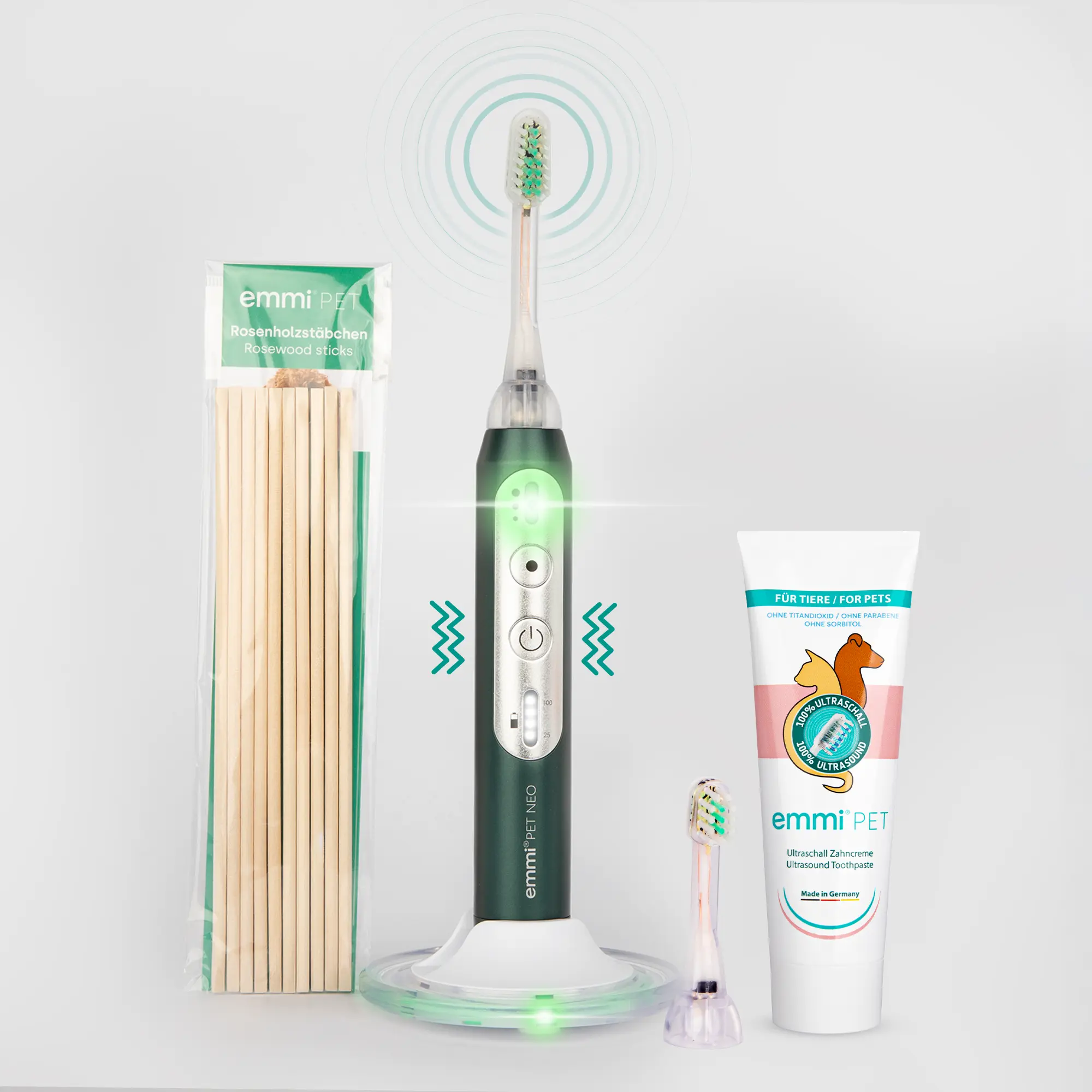
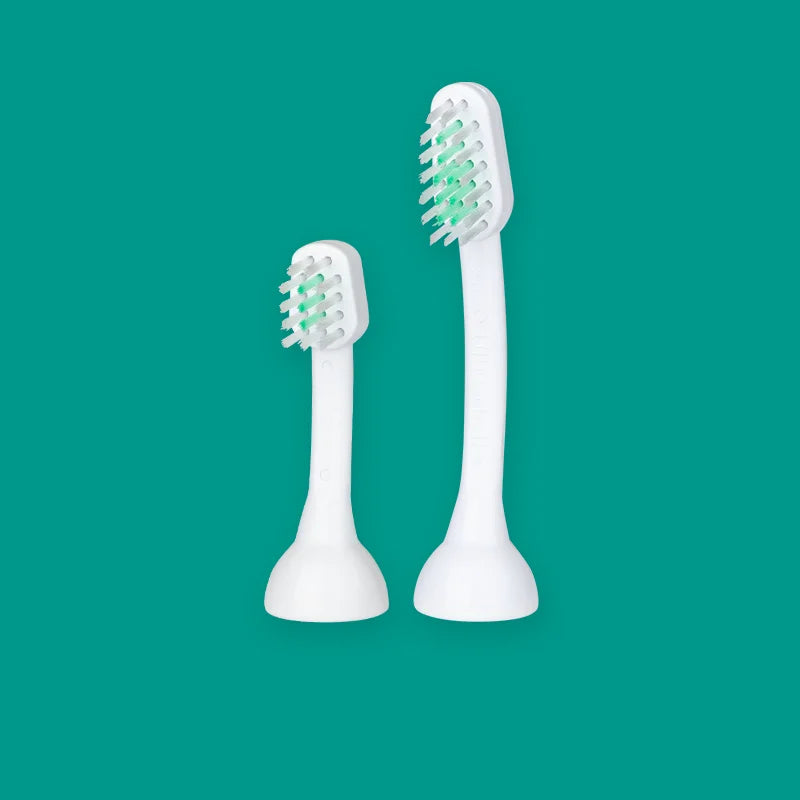
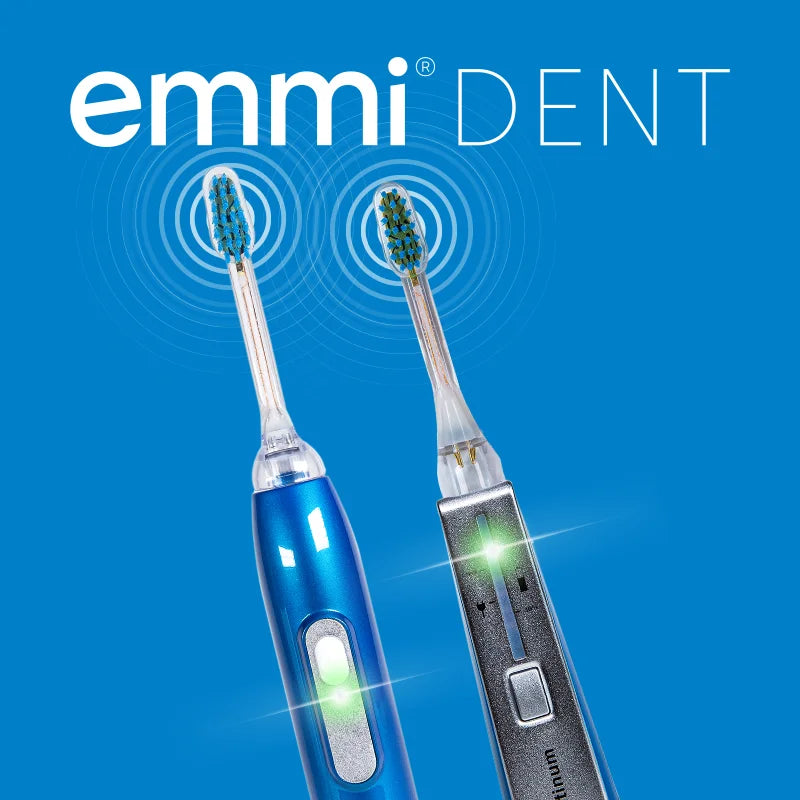
Many pet owners therefore integrate our emmi-pet ultrasonic toothbrush into their daily grooming routine. It can help to reduce bacterial plaque and support oral hygiene. Precisely because many changes in the mouth develop insidiously, consistent care can help to promote long-term oral health.
Of course, home dental care does not replace a veterinary examination. Regular check-ups with the veterinarian remain an important part of health care and help to identify possible problems early.
What You Can Observe and Support in Everyday Life
If you notice swollen lips, calm observation helps first. Many dogs sense very accurately when their owners react with concern. Therefore, it is advisable to view the situation as objectively as possible and to pay attention to further changes.
First, observe whether the swelling remains the same, increases, or subsides. Also pay attention to your dog's behavior when eating, drinking, and playing. Changes in these areas often provide valuable clues as to how significant the limitation actually is.
It can also be helpful to look at the following points:
- Is your dog eating normally?
- Is he chewing as usual?
- Does he appear alert and active?
- Is there increased salivation?
- Are the gums or mucous membranes altered?
Such observations can also be helpful for the veterinarian later if an examination becomes necessary.
Furthermore, it is worthwhile to keep an eye on general oral hygiene permanently. Regular dental care, suitable chew toys and veterinary preventive examinations together form a good basis for your dog's oral health.
Suddenly swollen lips can initially be unsettling for many pet owners. In fact, the causes can be very different and range from harmless irritations to changes in the area of teeth, gums or mucous membranes. Anyone who observes carefully, takes changes seriously and seeks veterinary advice for persistent complaints creates the best conditions for early clarification. At the same time, consistent oral care helps to support oral health in the long term and to detect possible problems early.