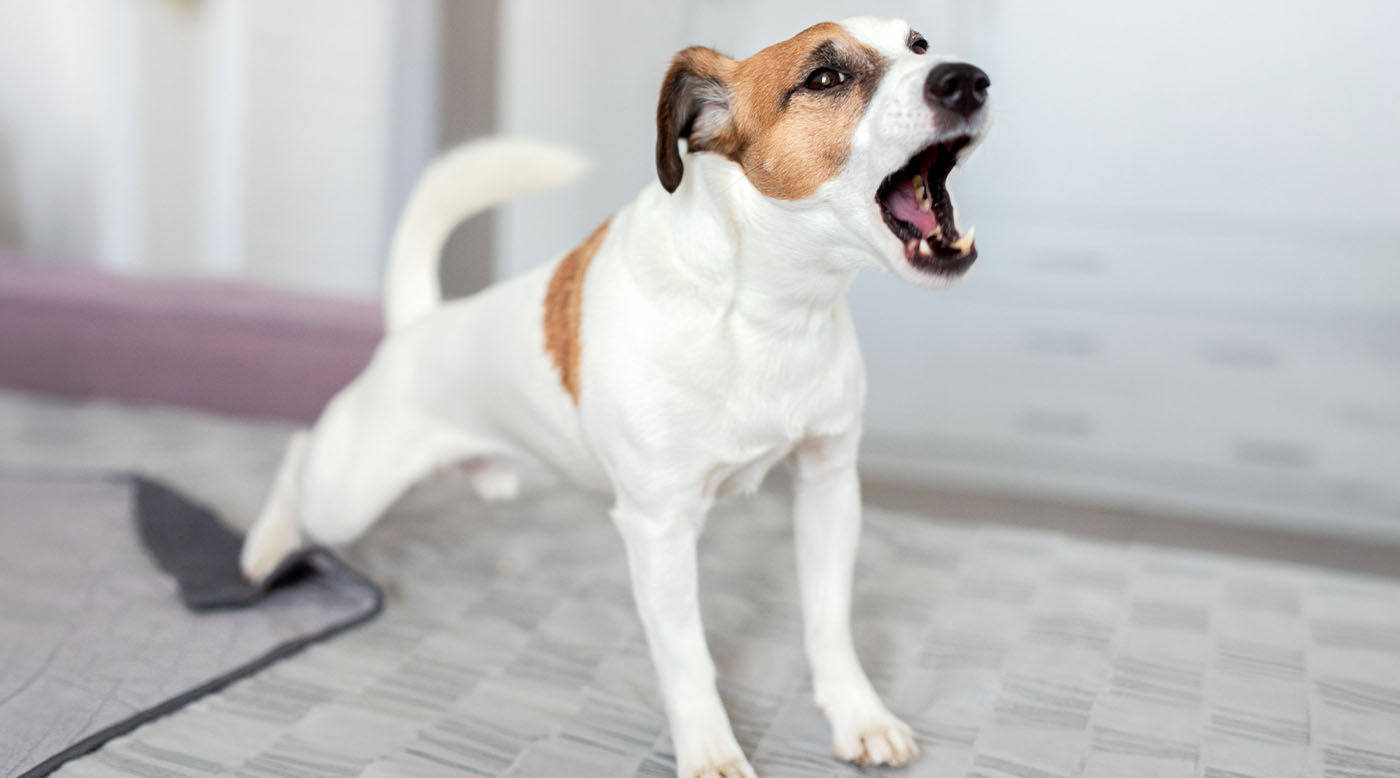

















Dogs owners know this picture: No sooner has the dog seemingly settled down comfortably than it gets up again a few minutes later. First it lies in its basket, then on the tiles in the hallway, then on the carpet in the living room and later perhaps in a completely different place. The question quickly arises as to why the dog seemingly cannot find a suitable place to rest.
In fact, a periodic change of sleeping place is completely normal behavior for many dogs. Our four-legged friends do not choose their sleeping place by chance. Temperature, noise, light conditions, social proximity and personal sense of security play an important role. Some dogs prefer a sunny spot by the window in the morning and prefer a cooler corner in the afternoon.
At the same time, frequent wandering can also be an indication that your dog cannot find a truly comfortable resting position. Older dogs, large breeds or animals with sensitive musculoskeletal systems in particular sometimes change their position again and again because certain areas of the body are subjected to stress when lying down.
Therefore, it is worthwhile to observe the behavior more closely. Not every change of place is a warning sign. However, if the changes occur very frequently or your dog appears increasingly restless when lying down and getting up, a closer look at the lying comfort may be useful.
In this article, we explain why dogs change their sleeping place, when there can be more to it than a simple preference, and why a suitable lying surface is often more important for well-being and recovery than many pet owners suspect.
Why dogs change their sleeping place at all
Dogs spend a large part of their day resting and sleeping. Depending on their age, activity level and health, this can be twelve to twenty hours a day. This makes the choice of a pleasant resting place all the more important.
Dogs are guided by many different factors. One of the most important is temperature. Dogs cannot regulate their body temperature in the same way as humans. Therefore, depending on the weather, they consciously seek out different surfaces. In summer, cool tiles often appear particularly attractive, while in winter, softly padded and warm sleeping places are preferred.
The environment also plays a role. Some dogs want to lie as close as possible to their family, while others prefer a sheltered retreat for their resting phases. Noise, visitors or activities in the household can also lead to more frequent changes of sleeping place.
In addition, dogs regularly change their lying position during sleep. Similar to humans, they turn, stretch or seek another posture to relieve pressure points. An occasional change of place is therefore not unusual behavior at first.
It only becomes interesting when the dog never seems to settle down. If it constantly gets up again, turns several times in a circle or seems dissatisfied with any position, this may indicate that another factor is playing a role. In such cases, a closer look at the quality and suitability of the existing sleeping place is worthwhile.
When frequent changes of place can indicate a lack of lying comfort
Not every dog that changes its sleeping place automatically has complaints. Nevertheless, there are situations in which frequent wandering can actually be related to lying comfort. Especially when a dog seems unable to find a position in which it can lie relaxed for a longer period.
When lying down, pressure is constantly exerted on certain areas of the body. Shoulder joints, hips, elbows and spine bear a large part of the body weight. If the lying surface is too hard, too thin or unevenly padded, these pressure points can be subjected to greater stress. The dog often reacts to this not with obvious pain signals, but by frequent repositioning.
This is particularly noticeable in larger dog breeds. The higher the body weight, the greater the stress on joints and muscles. But even slender dogs with little subcutaneous fat can react sensitively to unsuitable lying surfaces. They often feel hard surfaces faster and therefore change their position more often.
Some dogs also show a certain restlessness before lying down. They turn several times in a circle, scratch at the bed or get up again shortly after lying down. This behavior can be completely normal. However, if it occurs regularly and the dog takes a long time to find a comfortable position, the lying surface can be a possible influencing factor.
In addition, many dogs do not clearly show discomfort. Unlike humans, they do not complain about back pain or feelings of pressure. Instead, they adapt their behavior. This is precisely why small changes are often particularly valuable. Anyone who observes their dog daily often recognizes early on when resting behavior changes or lying down becomes increasingly difficult.
Which dogs particularly benefit from a good lying surface
Basically, every dog benefits from a pleasant and well-supporting sleeping place. However, some dogs have a particularly high need for a high-quality lying surface.
This includes primarily older dogs. With increasing age, the musculoskeletal system changes. Joints lose some of their resilience, muscles break down more easily, and regeneration takes more time. A comfortable resting place can help to relieve the body better during recovery phases.
Large and heavy dog breeds also often benefit from good pressure distribution. Dogs such as Labrador Retrievers, Golden Retrievers, German Shepherds or Bernese Mountain Dogs weigh significantly more than smaller breeds. This results in higher stress on joints and spine, especially during long resting phases.
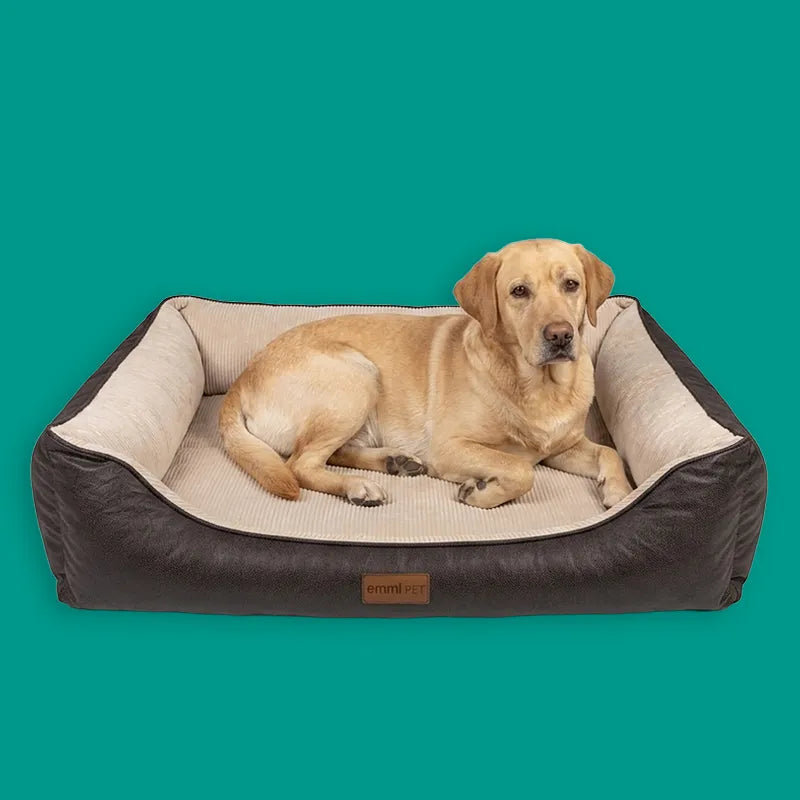
We must also not forget active dogs. Anyone who regularly hikes, participates in dog sports or otherwise physically challenges their dog puts a lot of strain on muscles and joints. After such activities, recovery plays an important role. A pleasant lying place like our orthopedic emmi-dent dog beds supports the necessary resting phase and can help the dog to feel generally more comfortable.
Dogs with known orthopedic limitations or after veterinary treatments also often require special attention when it comes to lying comfort. In such cases, the selection of a suitable dog bed should ideally be coordinated with the treating veterinarian.
Regardless of age or health status, however: The more time a dog spends resting, the more important the quality of its sleeping place becomes. After all, a large part of physical and mental regeneration takes place during resting phases.
How to recognize that your dog is not lying optimally
Dogs often show discomfort much more subtly than many people expect. Therefore, it is worthwhile to carefully perceive the small changes in everyday life. Especially with resting behavior, first indications can often be recognized that a dog is not completely satisfied with its current lying surface.
A typical sign is frequent repositioning. If your dog changes its position several times within a short period of time or repeatedly gets up and lies down in another place, this may indicate that it cannot find a truly comfortable posture. This is not about occasional turning or stretching, but about a noticeable restlessness during resting phases.
Getting up itself can also provide clues. If your dog appears stiff after lying down, needs several attempts or carefully shifts its weight to its front legs, this may indicate increased stress on certain body areas. Older dogs in particular often show such changes gradually.
Further possible observations are:
- frequent circling before lying down
- longer search for a suitable position
- sleeping on unusual surfaces
- avoiding the actual dog bed
- frequent switching between warm and cool surfaces
- visible pressure points on elbows or joints
Of course, none of these signs automatically means that there is a health problem. Dogs have individual preferences and sometimes develop astonishing sleeping habits. However, if several of these observations coincide or the behavior changes over time, it is worthwhile to critically review the sleeping place.
The overall picture should always be considered. If your dog also shows movement restrictions, appears stiff after resting phases or its activity level changes, a veterinary examination may be useful. Only there can it be reliably assessed whether orthopedic or other health causes are involved.
Why orthopedic dog beds can be useful for many dogs
Orthopedic dog beds are often associated with older dogs. However, they can actually be interesting for many dogs regardless of age. Their goal is to support the body as evenly as possible while lying down and to reduce pressure points.
In contrast to simple cushions or very thin dog beds, high-quality orthopedic lying surfaces adapt better to the body shape. This results in more even support for joints, spine and muscles. Especially during long resting phases, this can significantly improve lying comfort.
Many dogs spend more than half of their day resting or sleeping. This is precisely why the sleeping place should not be regarded as a secondary piece of furniture. It is an important part of daily well-being. Just as humans benefit from a good mattress, the right lying surface can also make a difference for dogs.
An orthopedic dog bed can be particularly useful for:
- older dogs
- large and heavy breeds
- very active dogs
- dogs with known joint problems
- animals in longer recovery phases
A realistic expectation is important here. A dog bed does not replace veterinary treatment and cannot cure existing diseases. However, it can help to improve lying comfort and support the body as well as possible during resting phases.
If your dog frequently changes its resting place, there isn't necessarily a problem behind it. Often, temperature, habits or personal preferences play a role. At the same time, persistent restlessness when lying down can be an indication that the current lying surface does not optimally suit your dog's needs. Anyone who carefully observes resting behavior and pays attention to a comfortable sleeping place supports an important part of daily recovery. Because good sleep and relaxed resting phases contribute significantly to your dog being active, balanced and content in everyday life.