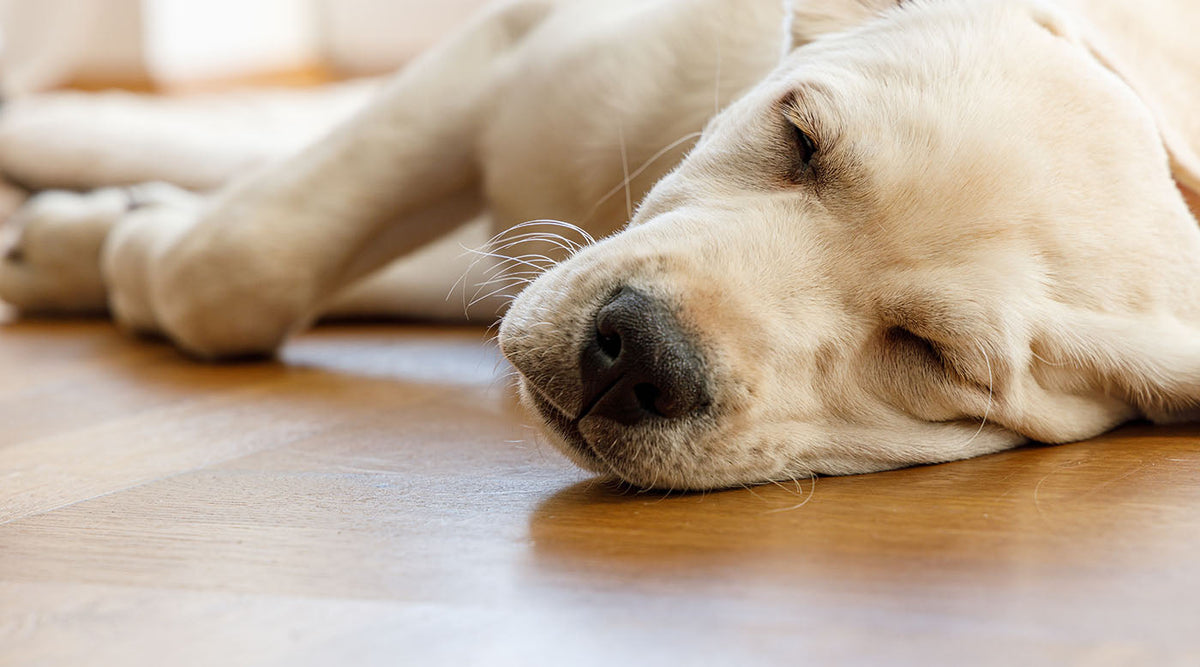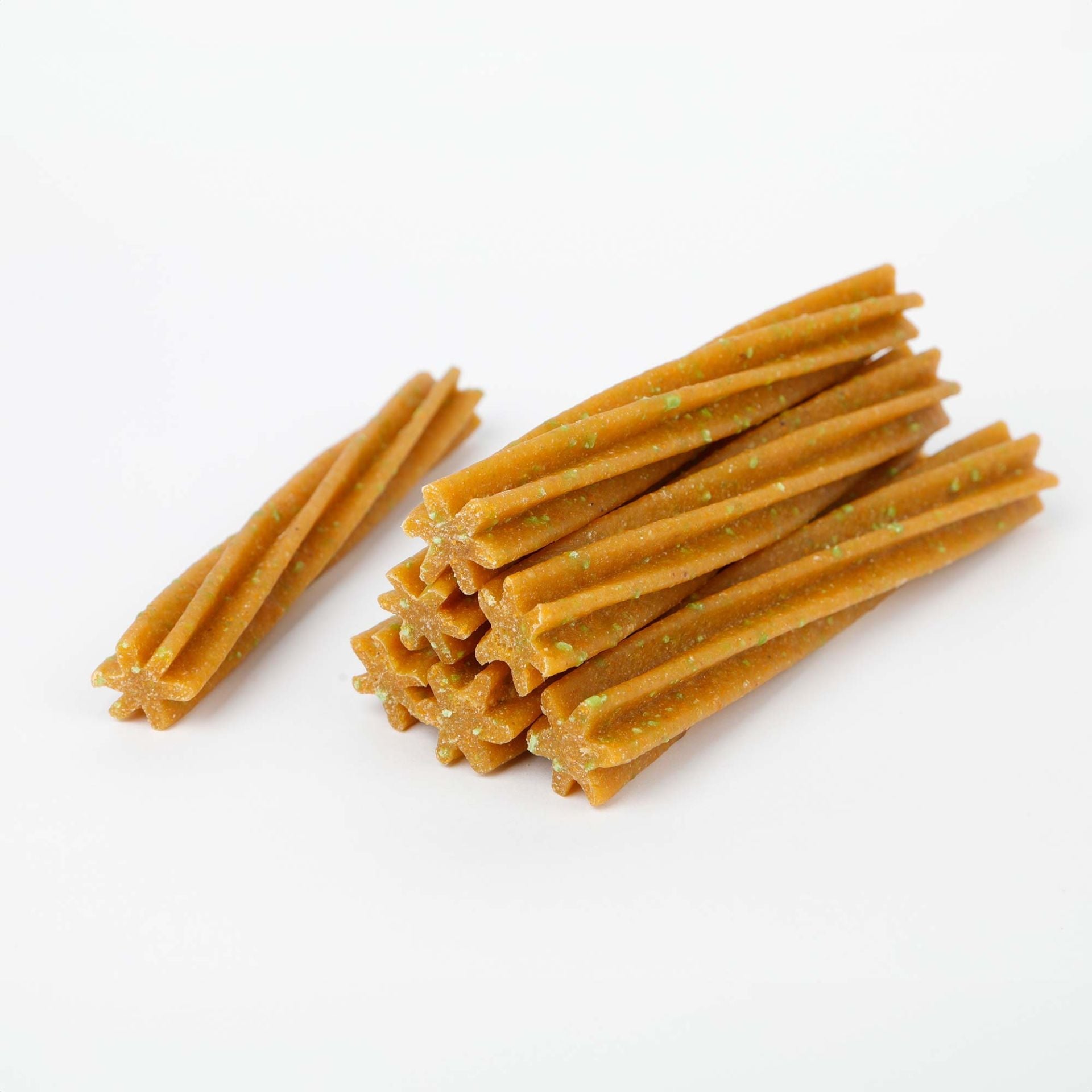










You probably know this look very well. You reach for the pack of their favorite snack, and your dog knows immediately what is about to happen. Perhaps they are already standing next to you before you have even fully opened the bag. For them, it’s a little highlight, and for you, it’s one of those normal moments that you don't really think twice about.
Until you notice that something is different today.
Your dog takes the snack with just as much enthusiasm as always. But instead of starting to chew it right away, they pause for a moment. They nibble more cautiously, stop in between, or suddenly take significantly longer. Perhaps you overlook it the first time. The second or third time, this little feeling remains: they didn’t use to do that.
We, as the people who spend every day with our dogs, often know these tiny changes better than anyone else. We know how they come out of their bed in the morning, how they react to the rustling of the treat bag, and precisely how quickly their favorite snack usually disappears.
When exactly these kinds of habits change, it is worth taking a closer look. Not because every cautious chew must immediately indicate a dental problem. But because your dog cannot tell you: this tooth feels strange. Or: chewing hurts in this spot. Instead, they might simply change how they go about it.
Sensitive teeth, irritated gums, or other changes in the mouth can be a potential explanation. Perhaps the snack is harder than usual, or your dog just doesn’t feel like chewing vigorously right now. A single moment, therefore, does not yet tell you what is behind it.
In this article, we explain why your dog's chewing behavior might suddenly change, what role teeth and gums play in this, and which small signs you shouldn't overlook. You will also learn when a veterinary check-up becomes sensible and why regular dental care should begin long before the first obvious tooth problem occurs.
When enjoyable chewing suddenly becomes cautious nibbling
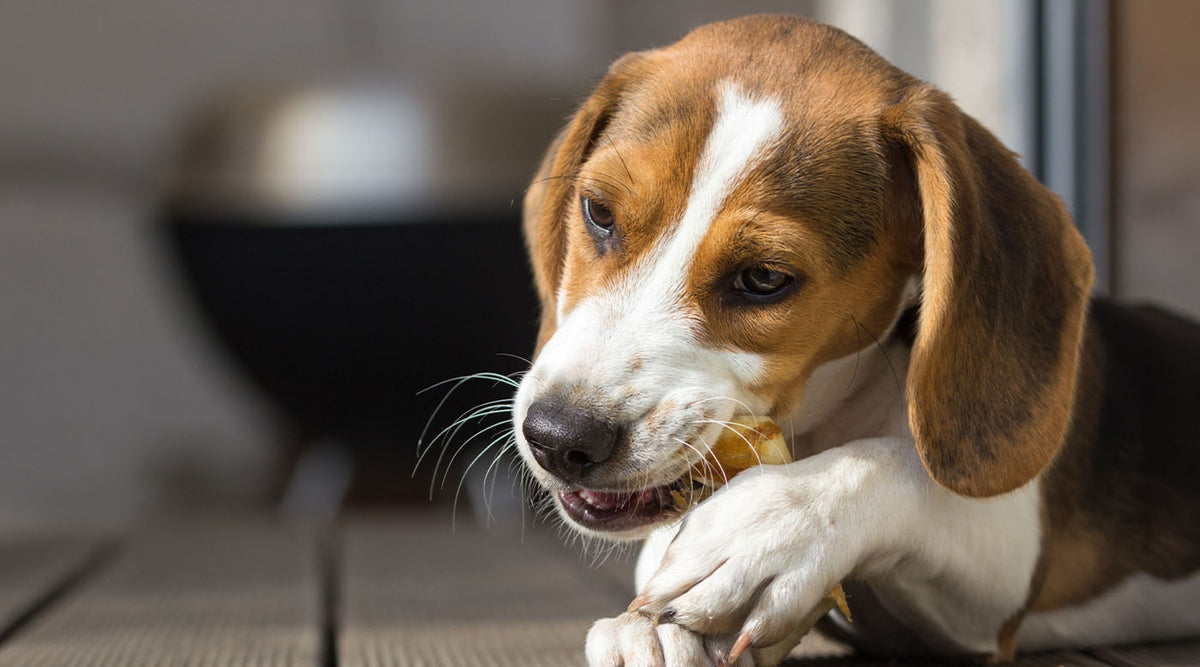
Perhaps you know exactly how your dog eats their favorite snack. Some dogs hold it between their front paws and work their way through piece by piece. Others chew vigorously a few times and swallow larger pieces. Still others proudly carry their prey around the apartment before eating it at all.
Such habits are helpful because they give you a very personal baseline for comparison. It is not the speed alone that is interesting. It becomes intriguing when your dog suddenly does something differently that they have always done the same way before.
So, feel free to take a closer look. Are they actually chewing slower, or are they taking more frequent breaks? Do they turn the snack in their mouth an unusual number of times? Does a piece fall out? Are they perhaps trying to chew using only specific teeth? Do they continue to take softer snacks just as enthusiastically and quickly, while harder ones are suddenly left behind?
This comparison, in particular, can be quite revealing. Soft food makes much fewer demands on the teeth than a firm chew. This is why sensitivities can become apparent during vigorous nibbling, even though your dog is still eating their regular food without any problems.
And that is exactly what makes changes in the mouth sometimes so easy to overlook. Many dogs do not simply stop eating as soon as something is uncomfortable for them. Instead, they change the way they eat.
Therefore, if your dog is suddenly handling their favorite snack more cautiously, it is not a diagnosis yet. But it is a good reason not to just offer the next few meals and chews on the side. Stay nearby for once and observe what your dog is actually doing with their mouth. After all, you know their normal behavior better than anyone else.
Why sensitive teeth and gums can change chewing
A firm snack challenges the teeth significantly more than soft food. Your dog must bite down, hold the snack, and break it down with their molars. This creates pressure. If a tooth is sensitive or the surrounding gum is irritated, that very pressure can become uncomfortable.
Initially, there may be very little to see from the outside. Bacterial plaque forms on the tooth surfaces and collects especially at the gum line. If the gums are irritated, they can become red, more sensitive, or bleed more easily during chewing. A damaged tooth can also cause problems. For dogs that enjoy working on very hard chews, it is therefore worth taking a close look at their teeth from time to time.
However, some changes cannot be reliably detected at home at all. A tooth can look quite inconspicuous on the outside and still cause discomfort. Therefore, you should not rely on the assumption that everything in the mouth must be fine just because you don't see anything unusual at first glance.
In addition, dogs often find amazingly quick ways to avoid uncomfortable areas. Instead of rejecting a snack completely, they may chew more cautiously. Your dog stops more frequently, changes the position of the snack, or prefers to use a different part of the mouth. From the outside, this initially just looks a little more cumbersome than usual.
This is precisely why comparing it to normal behavior is so helpful. If the same dog has been enthusiastically chewing the same favorite snack for weeks and suddenly treats it much more cautiously, something has changed. What exactly is behind it cannot be determined by observation alone. However, teeth and gums are areas you should keep an eye on.
And please do not try to "test" a potentially sensitive tooth yourself by pressing or tapping on it. If your dog has discomfort, it is not only unpleasant for them. It also won't reliably tell you at home what the cause is.
You should also observe these small changes related to eating
Often, it does not stop with a single change in chewing behavior. The other signs are just sometimes so inconspicuous that they hardly attract attention in everyday life.
Perhaps your dog still runs to their bowl enthusiastically but eats differently than before. They pick up dry food and drop individual pieces again. They suddenly chew only very briefly and swallow faster. Or they take significantly longer, even though the portion has remained the same.
It is also worth looking at known habits outside of meal times. A dog that usually walks around excitedly with a ball or toy in its mouth might suddenly only carry it for a short time. During a game of tug-of-war, they let go sooner. Hard chews are left untouched, while soft treats are still accepted without problems.
Smacking, more frequent licking of the lips, increased drooling, or a significantly changed mouth odor can also be noticeable. When looking into the mouth, you might discover reddened gums, heavier plaque, or a spot that looks different than usual. Blood on a toy or chew should also not simply be ignored.
You don't need to stand next to your dog with a flashlight after every meal now. It is much more helpful to know their normal habits. Then, changes usually become noticeable all by themselves.
A single instance of slow eating can have a completely harmless reason. However, if your dog is suddenly chewing more cautiously, avoids hard things, and additionally carries their toy differently or visible changes in the mouth appear, a different overall picture emerges.
Exactly at this point, you should not try to solve the problem exclusively with a softer snack. While the softer snack might make eating more comfortable for your dog temporarily, it does not answer the question of why vigorous chewing has suddenly become uncomfortable.
The better you can piece together the small changes, the easier it is to assess when an observation becomes something that should be clarified by a veterinarian.