

















If you have lived with a dog for many years, you often know every small change in their daily routine. Perhaps you've noticed that your dog takes a little longer to get up in the mornings, or that after a long nap, they walk cautiously at first and only seem relaxed after a few steps. Many pet owners eventually observe such changes and wonder if this behavior is normal or could indicate a health problem.
Indeed, stiff movements after periods of rest can have many causes. It's not always an immediate sign of illness. Similar to humans, dogs sometimes need a little time for their muscles, tendons, and joints to "warm up" properly after a long break. This is particularly noticeable in older dogs. However, even young and active dogs can appear temporarily stiffer after intense exertion or unaccustomed activities.
The most important thing is to observe the development carefully. Does the stiffness occur only occasionally, or is it becoming increasingly frequent? Is your dog's eagerness to move changing? Such observations help to better interpret the behavior and identify possible causes early on.
In this article, we explain why dogs sometimes appear stiff after periods of rest, what role joints and muscles play, and how you can gently support your dog's mobility in everyday life.
Why many dogs appear stiff after getting up
Your dog's body works around the clock. Even during a rest period, numerous processes continue. Muscles relax, joints are relieved of stress, and the organism uses the break for regeneration. However, after prolonged periods of lying down, it can take some time for all structures to work optimally again.
Joints, in particular, react sensitively to prolonged periods of rest. During movement, synovial fluid is evenly distributed, helping movements to proceed smoothly. After long periods of lying down, the body often needs a few minutes to restore this state. This is why some dogs walk a little more cautiously at first and appear much more relaxed after a few steps.
Musculature also plays an important role. Muscles that are not moved much temporarily lose elasticity. After getting up, they first need to adapt to the strain again. Many dogs therefore stretch extensively before resuming their normal rhythm of movement. This behavior is often completely unremarkable and part of their natural daily routine.
With increasing age, the musculoskeletal system also changes. The ability to regenerate decreases somewhat, and stresses are no longer processed as quickly as in younger years. This can make periods of rest more noticeable. At the same time, the likelihood of wear and tear on joints or changes in muscles and tendons increases.
Therefore, it is worthwhile not only to consider the stiffness itself but also its development over a longer period. Occasional stiffness when starting to move does not automatically have to be a cause for concern. However, if the complaints become more frequent or pronounced, a closer look should be taken.
What role joints, musculature, and age play
A dog's musculoskeletal system is a complex interplay of bones, joints, muscles, tendons, and ligaments. For every movement to run smoothly, all these structures must work together optimally. Even small changes in one area can cause a dog to appear stiffer after periods of rest or to take more time to get moving.
With increasing age, these changes become more frequent. Joints are subjected to daily stress for many years. Running, jumping, playing, and romping are all part of an active dog's life. At the same time, every movement leaves its mark on the musculoskeletal system. Many older dogs therefore eventually show the first signs of restricted mobility. However, this does not automatically mean that they are in pain or can no longer enjoy their daily lives.
Musculature also changes over the years. If it is used less or activity decreases, muscle mass can be lost. This deprives the body of some of the natural support for joints and the spine. The dog appears more cautious when getting up and often needs a few steps before finding its usual gait again.
In addition to age, other factors can also play a role. Obesity significantly increases the strain on joints and muscles. Similarly, very intense athletic activities or unaccustomed strains can temporarily lead to muscle soreness-like symptoms. Especially after long hikes, extended play sessions, or athletic challenges, many pet owners observe that their dog seems a little stiffer than usual the next morning.
Therefore, it is important to always consider each dog individually. An eight-year-old dog can be significantly more agile than a younger dog with obesity or poor musculature. It is not age alone that determines mobility, but the interaction of many different factors.
How to recognize if your dog needs support
Occasional stiffness after getting up is not automatically a warning sign. Many dogs stretch briefly, walk a few steps, and then move completely normally again. However, it's a different matter if the changes occur more frequently or intensify over time.
An important indicator is the duration of the stiffness. If your dog only needs a few seconds to get moving, it is usually unproblematic. However, if it takes several minutes or every movement seems difficult at first, a closer observation is worthwhile.
Behavior in everyday life also provides valuable clues. Some dogs suddenly avoid activities they used to enjoy. They jump into the car less often, hesitate when climbing stairs, or want to go on shorter walks. Often this happens gradually, so the changes are hardly noticeable at first.
Typical signs may include:
- slow or laborious getting up
- cautious gait after periods of rest
- reduced enthusiasm for movement
- difficulty jumping
- more frequent lying down during walks
- altered posture
In addition, it's worth looking at the musculature. Dogs that avoid certain movements often unknowingly lose muscle mass in some areas. This creates a vicious circle: less movement leads to less muscle, and less muscle, in turn, makes movement more difficult.
If you notice such changes, a veterinary examination is advisable. Veterinarians can determine whether age-related changes, orthopedic problems, or other causes are present. The earlier possible limitations are recognized, the better appropriate measures can be planned.
How you can promote mobility in everyday life
Even if mobility changes over the years, you can support your dog in various ways in everyday life. Often, even small adjustments can make a noticeable difference. The key is not to aim for as much movement as possible, but the right kind of movement.
Regular walks are among the most important building blocks. Many short and consistent periods of movement are often more comfortable for joints and muscles than infrequent, very long periods of exertion. This keeps the body moving without being overstressed. Especially after periods of rest, a slow start can be beneficial. Give your dog a few minutes to warm up and find their natural rhythm of movement.
Body weight also plays an important role. Every additional kilogram increases the strain on joints, tendons, and ligaments. A healthy weight can therefore help maintain mobility in the long term and avoid unnecessary strain.
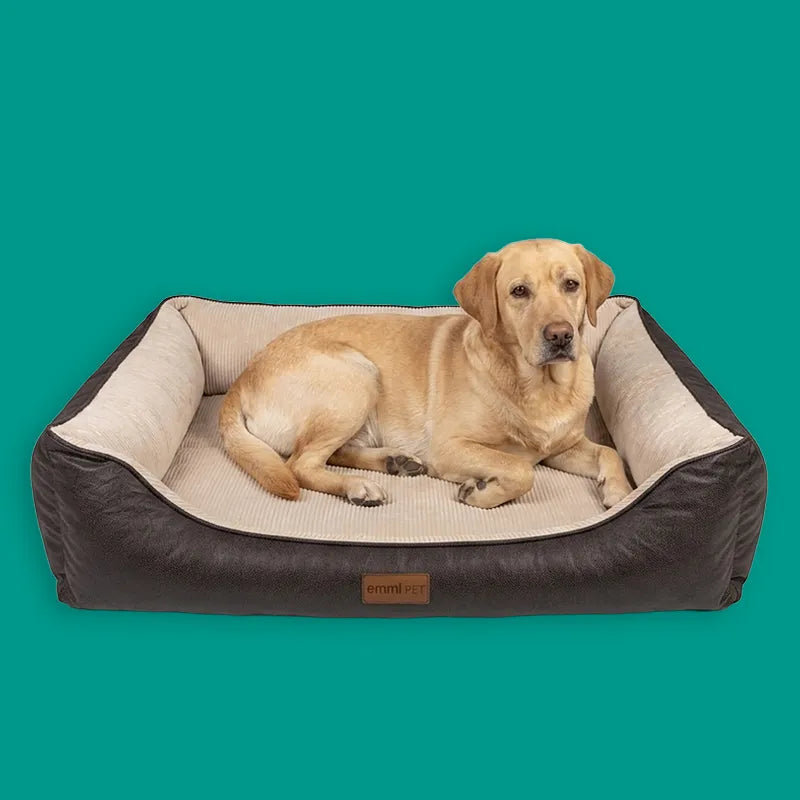
An appropriate environment is equally important. Slippery floors make it difficult for many dogs to get up and can promote insecurity. Carpets, runners, or other non-slip surfaces help many animals to move more safely. A well-padded resting place also supports the musculoskeletal system during recovery periods.
In addition, many dogs benefit from targeted exercises to promote musculature. This is not about peak athletic performance, but about controlled and consistent movements. Even consciously designed walks on different surfaces can help to challenge the musculature and promote coordination.
However, your dog's individual resilience always remains important. What is good for one dog may already be too much for another. Therefore, it is worthwhile to carefully observe changes and adapt the activity level to age, health status, and personal needs.
What role targeted physical support can play
In addition to exercise, weight control, and an adapted environment, many pet owners are interested in supplementary options to support muscles and joints. Especially in older dogs or animals with known limitations, physical measures are becoming increasingly important.
The aim of such applications is not to treat diseases or replace veterinary measures. Rather, they can be part of a holistic support program aimed at well-being, mobility, and quality of life. Many dogs enjoy these applications as a pleasant addition to their daily routine.
In this context, our customers use our emmi-pet Physio Set for pets as part of their care routine. The application can help support regeneration after exertion and supplement the regular care of muscles and joints. Especially for dogs that take a little longer to get moving after periods of rest, many owners integrate such measures into their daily lives.
However, realistic expectations remain important. Physical support does not replace a diagnosis or veterinary treatment. If a dog suddenly shows severe movement restrictions, pain, or its condition significantly worsens, a veterinary clarification should always be sought first.
Many dogs experience phases in their lives when they seem a little stiffer after getting up. Often, these are normal age-related changes or temporary reactions to stress. At the same time, joints, muscles, or other physical factors may be involved. By carefully observing your dog, ensuring regular exercise, and using supportive measures when needed, you create good conditions for as many active and pleasant years as possible. Because for dogs, mobility not only means physical activity but also joy of life, independence, and the ability to enjoy their daily lives as carefree as possible.