









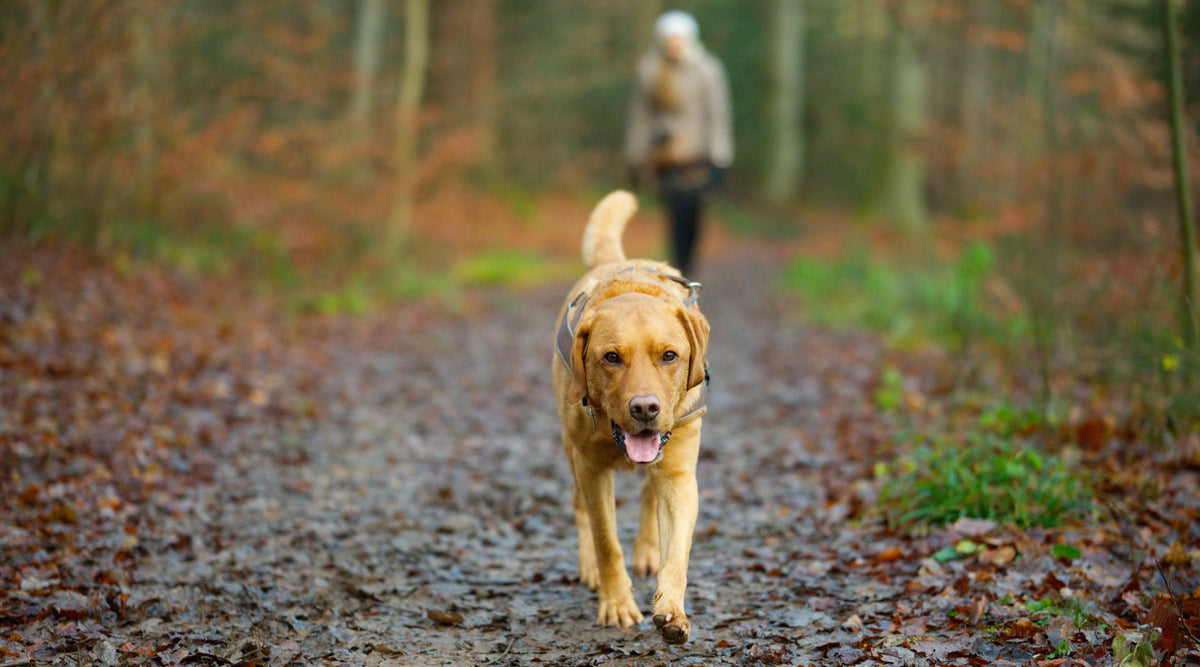
It has gotten cold outside. The leaves lie wet on the paths, the wind whistles through the trees, and maybe it even rained a little on your last walk. Your dog was still full of enthusiasm. He sniffed around, ran through the leaves, and thoroughly investigated every interesting smell. Maybe he even played with another dog along the way.
Now you are back home. You take off your jacket, put your shoes aside, and look forward to a cozy afternoon. But your dog doesn't seem to be in rest mode yet. He runs around the apartment, constantly changes his lying place, or only lies down briefly before getting up again. Maybe you wonder if he is simply still excited. Or if the cold outside affected him more than you initially thought. Because especially on cold and wet days, various factors can influence how your dog feels after a walk.
In this article, we explain why your dog sometimes finds it difficult to settle down after an autumn or winter walk, what role cold, wetness, and physical exertion can play, and when you should take a closer look. You will also find out how to provide him with a pleasant recovery phase at home and what options for complementary care you can find in our emmi-PET animal physio range.
Why your dog sometimes remains restless after a cold walk
Maybe you know this from your own everyday life. You come home after a long day, are actually tired, and want to relax. Nevertheless, it is difficult for you to switch off immediately. It can look similar with your dog. After all, a walk means much more than pure exercise for him. There are new smells, sounds, and impressions everywhere. Maybe you encountered another dog, maybe he discovered game tracks, or maybe he was happy about a particularly exciting encounter.
All these experiences can contribute to your dog being excited for a while after the walk. Some dogs need a little time to return to a calmer state after this activity. But not every restlessness is related to excitement. Especially on cold days, you should also pay attention to whether your dog might be cold or feel physically unwell. Maybe his fur is still damp because you were out in the rain. Maybe he exerted himself more than usual while playing or stepped awkwardly on a slippery path. Pain can also cause a dog to be unable to find a comfortable lying place and to get up again and again. That is why it is worth looking at his behavior in connection with the entire walk.
Does your dog otherwise seem attentive, move normally, and settle down after a while? Or do you also notice shivering, an altered posture, lameness, or unusual sensitivity to touch? Such differences are important. Because while an excited dog may only need a little time and a quiet environment, persistent restlessness or physical abnormalities can indicate discomfort. If your dog shivers unusually strongly, seems weak, shows pain, or his condition does not improve, you should seek veterinary advice.
How cold, wetness, and exercise affect your dog's well-being
Maybe you have already observed that your dog reacts very differently to cold weather. On some days, he runs enthusiastically through the forest, jumps over fallen branches, and seems not to notice the low temperatures at all. On other days, he would rather go home after just a few minutes. How well a dog copes with the cold depends on various factors. His size, age, coat type, and general state of health play an important role.
A healthy dog with a thick undercoat may cope better with low temperatures than a small, short-haired dog without a pronounced undercoat. Wetness and wind can also influence how quickly a dog cools down. Maybe your dog played extensively in puddles on the walk or ran through tall, damp grass. If his fur remains wet afterwards, he can get cold more quickly. In addition, there is the physical exertion. On muddy or slippery paths, your dog may have to compensate for his movements more frequently. Longer walks or exuberant play can also be more exhausting than it initially looks.
This does not, however, mean that cold automatically causes muscle tension or that every dog needs special treatments after a winter walk. Much more important is that you pay attention to his individual needs. Maybe thoroughly drying him off and providing a warm, draft-free lying place already helps your dog. Another dog may want to drink something after the walk and then rest undisturbed. In older dogs or animals with existing joint diseases, discomfort can become more noticeable under certain conditions. You should discuss such changes with a veterinarian. Because in the end, it is not about taking particularly elaborate care of your dog after every walk.
How to tell if your dog needs rest or veterinary support
Your dog lies on his blanket, gets up again, and walks a few steps through the living room. Shortly after, he lies down in another place. Maybe you initially think that he is simply not tired enough yet. But if your dog remains unusually restless after a walk, it is worth taking a closer look. Pay attention, for example, to how he moves. Does he walk as usual, or is he putting less weight on one leg? Does his gait seem stiff, or does he suddenly hesitate when he wants to lie down or get up again?
An altered posture can also be an indication that your dog does not feel well. Maybe he holds his back unusually tense or reacts sensitively when you touch him in a certain place. Some dogs also show pain by panting at rest, frequently changing their lying position, or exhibiting conspicuously reserved behavior. However, such signs can have different causes. Not every restlessness automatically means that your dog is in pain. Maybe he is still wound up after an exciting encounter or simply needs some time to process the many impressions.
The deciding factor is therefore whether his behavior matches what you normally know about him. If your dog falls asleep relaxed after a short time, moves normally, and otherwise seems fine, it is more likely to be temporary restlessness. If, on the other hand, he shows persistent discomfort, noticeable lameness, or unusual sensitivity to touch, you should have him examined by a veterinarian. In cases of severe weakness, breathing problems, pronounced hypothermia, or other serious symptoms, immediate veterinary care is required. In such situations, do not try to treat possible discomfort yourself with massages or technical care applications. Because before you can help your dog specifically, it should first be clarified what is behind his behavior. And maybe that is exactly the most important basis for good care: not simply assuming that your dog is only tired or tense, but paying close attention when something changes.
How to provide your dog with a pleasant rest phase after the walk
Maybe you know this moment when you are finally back home after a long autumn walk. You hang up your jacket, put the wet shoes aside, and your dog runs through the apartment once more before finding a cozy place. Actually, this would be the perfect time to settle down together. But sometimes your dog needs a little support to transition from the exciting walk to a relaxed afternoon. It is best to start with the very simple things. If his fur has gotten wet, you can carefully dry him with a soft towel. Pay special attention to his paws, belly, and areas where moisture can linger longer.
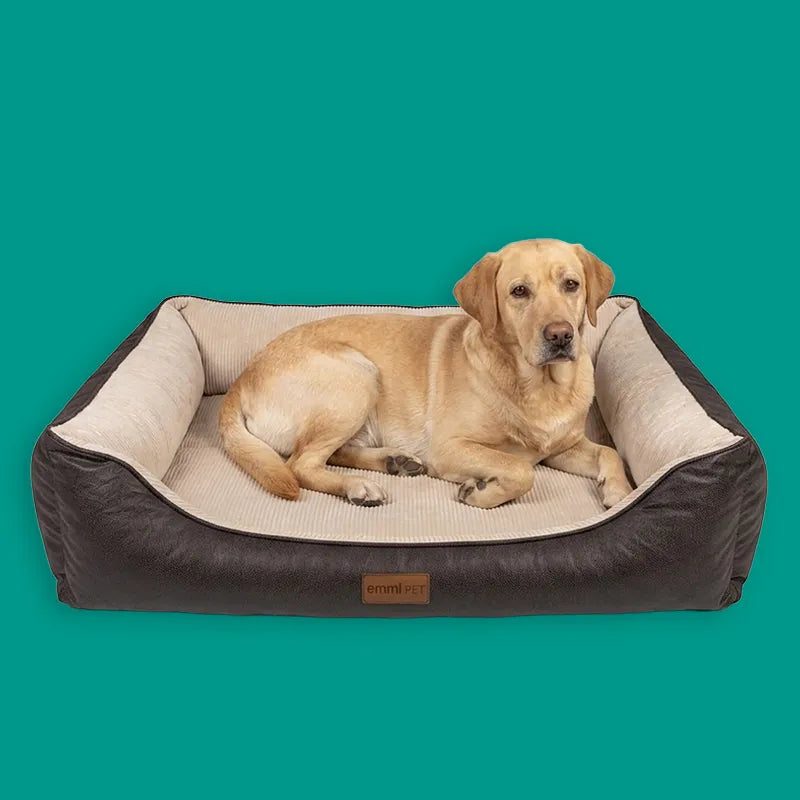
Take this opportunity to also check if small stones, twigs, or other foreign objects have become trapped between his toes. Afterwards, your dog should be given the opportunity to rest in a dry, pleasantly tempered, and draft-free place. Maybe he already has a favorite spot where he particularly likes to sleep. Then you do not have to change much at all. The most important thing is that he feels safe there and is not constantly disturbed. Some dogs want to drink briefly after the walk or move around the apartment a little before lying down. That is also perfectly fine.
Therefore, do not try to make your dog lie down immediately. Maybe it will help him if you also bring some calm to the afternoon. Instead of immediately starting the next exciting game, you can offer him a relaxed environment and let him decide when he wants to withdraw. If he moves normally, shows no discomfort, and falls asleep contentedly after a while, he often does not need anything more. Because sometimes the best support after a cold walk is surprisingly uncomplicated: a dry sleeping place, some peace, and the certainty that your dog can recover at his own pace.
What role complementary care and the emmi-PET animal physio range can play
Maybe you want to give your dog a little more attention after a long walk. Especially if you are out and about a lot, exercise together, or your dog is already a little older, you may be looking into options to support his physical well-being. In doing so, you may also come across applications from the field of animal physiotherapy. In principle, animal physiotherapeutic care can be a useful complement to veterinary care for certain discomforts or movement restrictions. Which measures are suitable, however, always depends on your dog's state of health and individual needs.
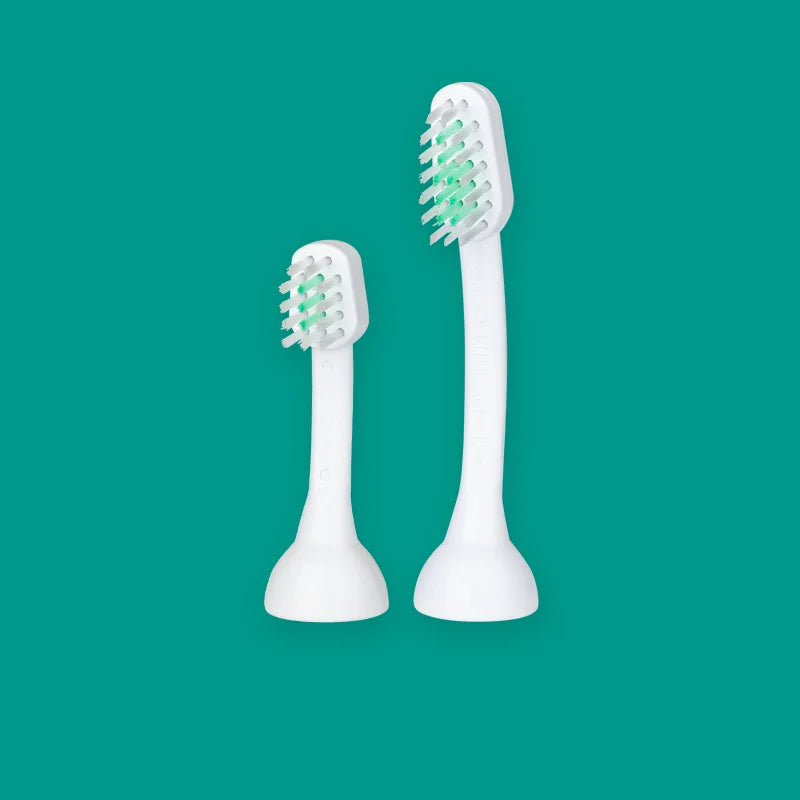
Not every application is suitable for every animal. This is especially true if your dog already has joint problems, is restricted after an injury, or reacts sensitively to touch. Our emmi-PET animal physio range or Physio Set is also among the products you can explore if you are looking for a complementary care routine for your dog. Before using such a product, however, you should inform yourself precisely about its intended use. The concrete manufacturer instructions, possible contraindications, and the question of whether the application is suitable for your dog are crucial.
Without corresponding product-specific evidence, it cannot be seriously promised that a certain device relieves muscle tension, alleviates pain, or accelerates regeneration. And even if your dog obviously enjoys an application, that does not automatically mean that a health-related cause is being treated. That is why it may be sensible to first discuss with your veterinarian's practice or a qualified animal physiotherapist which form of support is suitable for your dog. Especially with older dogs or animals with existing diseases, a professional assessment can be particularly valuable.
In everyday life, it is also important to respect your dog's signals. If he withdraws, becomes restless, or does not want to be touched, you should interrupt the application. After all, relaxation cannot be forced. If you would like to look more closely at complementary care applications, take a look at our emmi-PET animal physio range and the Physio Set in the shop. There you can find out about the intended areas of use and application instructions. Maybe you will also find that your dog needs one thing above all after a cold walk: time.
Time to get warm again. Time to process the many impressions from outside. And time to stretch out completely at his favorite spot. Because not every restless moment requires a special measure. Sometimes it is enough to observe attentively, take your dog's needs seriously, and enable an everyday life in which exercise and rest have their firm place. And maybe there is hardly anything more beautiful than settling down together after a long autumn walk, while the rain lashes against the windows outside and your dog finally falls asleep contentedly on his blanket.